What Is GEO and Why It Is Redefining Digital Visibility
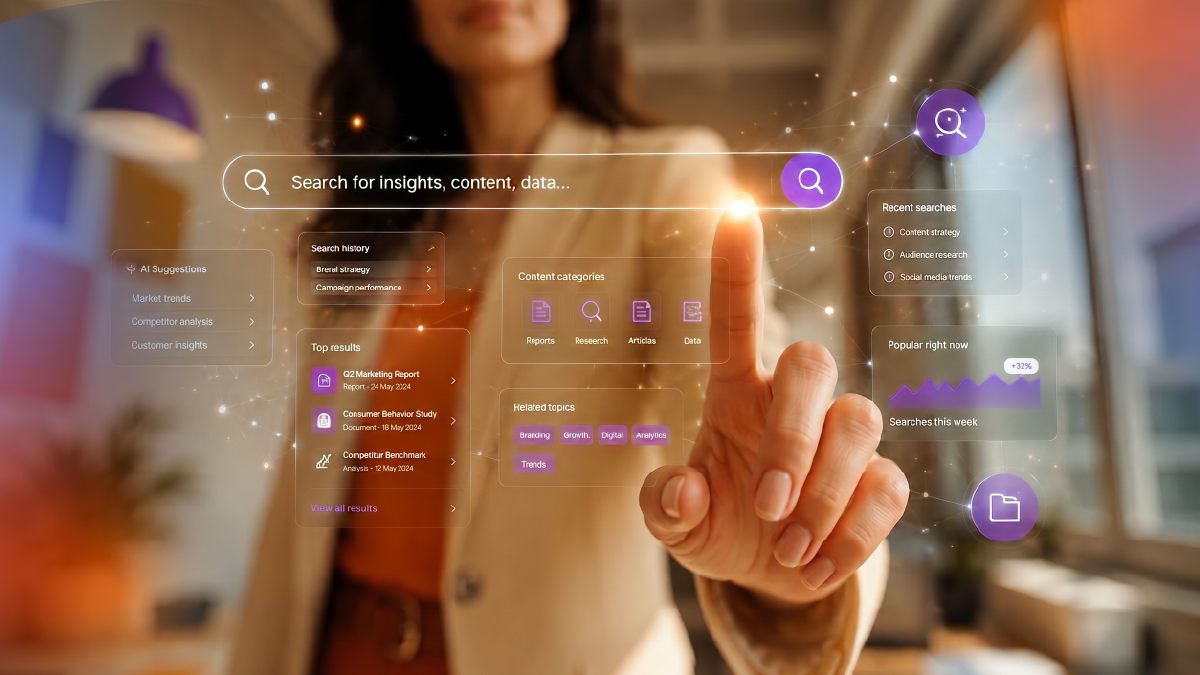
Search is evolving from links to answers.
Search behavior is changing faster than most companies have fully recognized.
For years, the model was simple: a user searched on Google, compared results, and clicked through different links.
Today, that process is evolving. More users are now asking questions directly to AI systems like ChatGPT, Gemini, Perplexity, or Google AI Overviews, and expecting complete, structured, and reliable answers without navigating multiple websites.
This shift is not incremental. It is structural. And it has a name: Generative Engine Optimization (GEO).
GEO is the practice of structuring and optimizing content so that a brand can be included as a source within AI-generated responses. Unlike traditional SEO, which focuses on ranking links, GEO focuses on being part of the answer itself.
From Searching on Google to Asking AI
This shift is not just technological, it is behavioral. Users are moving from exploration to resolution. Instead of reviewing multiple sources, they now expect systems to synthesize information for them.
The data already reflects this change. According to Gartner, 35% of Gen Z now use AI tools as their first stop for research, compared to 19% of millennials and just 7% of Gen X. This suggests that the dominant behavior of the future is already happening today.
At the same time, adoption continues to accelerate. ChatGPT has reached over 800 million weekly active users, according to statements from Sam Altman reported by TechCrunch.
The impact goes even further. McKinsey reported that by late 2025, 50% of consumers were already using AI-powered search as their primary way to find information and make decisions.
This fundamentally changes how brands are discovered. Before, visibility meant appearing in a list of results. Now, it increasingly means being included in the answer itself.
What GEO Is—and What It Is Not
GEO is often misunderstood as an extension of SEO. It is not. GEO is not about optimizing keywords or improving rankings in traditional search engines. It is about understanding how generative systems select, interpret, and synthesize information.
As explained by WordStream, the goal is no longer to rank higher, but to increase the likelihood of being cited within AI-generated responses.
In simple terms:
SEO competes for clicks
GEO competes to be part of the answer
This shift redefines how digital visibility works.
GEO vs SEO: A New Model of Visibility

Users are changing how they discover information.
The difference between SEO and GEO is not marginal, it changes the entire competitive landscape.
In SEO, brands compete for positions. In GEO, AI systems aggregate multiple sources and deliver a single synthesized response.
This means:
Visibility shifts from rankings to mentions
Traffic is no longer the only relevant metric
Authority is built through contextual relevance, not just backlinks
Recent analyses, such as those from CopyScale, highlight this distinction clearly: while SEO is designed to drive clicks, GEO is designed to secure inclusion within the response itself.
And the ecosystem is already moving in that direction. Today, around 60% of Google searches end without a click, and AI Overviews appear in more than 55% of results. Even within Google, visibility is increasingly shaped by generative outputs rather than traditional listings.
How AI Engines Decide What to Include
From the outside, it may seem like AI generates answers independently. In reality, many responses are built using existing web content.
However, not all content carries equal weight. According to Dojo.ai, only 5–10% of content used in AI responses comes directly from brand-owned websites, while over 65% comes from publishers, review platforms, and user-generated content.
This introduces a fundamental shift.
Authority is no longer defined only by what a brand says about itself, but by how the broader digital ecosystem validates that information. Content that is more likely to be used by generative engines tends to share key characteristics:
Clear and structured explanations
Direct answers to specific questions
Context supported by data or verifiable sources
Alignment with other credible sources
Firebrand Marketing highlights that these are not optional best practices in 2026—they are baseline requirements for visibility in generative environments.
What This Means for Brands
GEO helps brands become part of the answer.
The impact of GEO is not just technical. It is strategic.
For years, the question was: how do we rank on Google? Now, the question is evolving:
Is your brand present when someone asks AI about your category?
If the answer is no, there is a visibility gap that many organizations are not yet measuring. And that gap is significant.
According to Dojo.ai, $750 billion in U.S. revenue is expected to flow through AI-powered search by 2028. This is not an emerging channel—it is becoming a core decision layer. The impact is already visible in performance metrics. Over 36% of content marketing teams reported traffic declines between 2024 and 2025 due to AI search adoption.
In this context, not being visible is not just about losing clicks. It means not being considered at the moment decisions are made.
How to Start Preparing for GEO
Adopting GEO does not mean abandoning SEO—it means evolving it.
Some practical starting points include:
Ensuring content answers real questions, not just targets keywords
Structuring content so the answer appears early and clearly
Incorporing data, sources, and external validation
Building authority beyond owned media
Maintaining consistency across content and brand positioning
GEO is not a tactic. It is a strategic layer within modern content systems.
Digital Visibility Is Entering a New Phase
SEO remains essential. But it is no longer sufficient on its own.
The way people discover information is changing—and with it, the way brands build visibility.
GEO represents that evolution: a model where it is not enough to be present—you must be recognized as a credible source by the systems shaping user decisions.
At Loymark, we are not only analyzing this shift—we are building capabilities around it. This is where AuraGeo comes in: our approach to understanding, measuring, and improving how brands appear within AI-generated environments.
Because in this new landscape, visibility is no longer defined only by rankings or traffic, but by how often—and how accurately—your brand becomes part of the answer.