Media Solutions: How to Scale Results Beyond Digital Advertising?
Digital advertising is no longer an experimental channel or a support function. For most organizations today, it plays a direct role in revenue generation, pipeline development, and market expansion. Decisions at the leadership level are increasingly influenced by how effectively digital media performs.
Yet despite larger budgets and access to more platforms than ever, many companies continue to struggle with inconsistent results. The issue is rarely the lack of tools or spend. More often, it is the absence of a structured, integrated strategy. Fragmented execution, disconnected channels, and superficial measurement dilute impact and reduce accountability.
This is where media solutions fundamentally change the equation.
Media solutions redefine how brands plan, execute, and manage their advertising investment. Rather than running isolated campaigns across platforms like Google or Meta, organizations adopt a digital media strategy where every channel, format, and budget decision is directly linked to concrete business objectives.
By integrating planning, execution, analytics, and continuous optimization into a single system, media solutions turn digital media services into a coordinated ecosystem. The result is not just better performance, but greater control, transparency, and predictability across the customer journey.
At Loymark, we design media solutions for companies that expect more than visibility. As a media solutions agency, our focus is on transforming advertising investment into measurable, scalable business growth. In this article, we explore what media solutions are, how they work, and why they have become essential to modern digital advertising.
What Are Media Solutions and Why Are They Critical for Your Business?
Media solutions represent a strategic approach to planning, executing, and optimizing paid media in an integrated way. They are not short-term activations or isolated campaigns, but a system that connects multiple advertising platforms—such as Google Ads, Meta Ads, LinkedIn, YouTube, and programmatic environments—under a unified, results-driven framework.
Unlike fragmented media management, media solutions coordinate all advertising efforts within a single digital media strategy. This means clearly defining the role each channel plays in the customer journey, how platforms reinforce one another, and how they collectively contribute to outcomes such as revenue growth, lead quality, or market expansion.
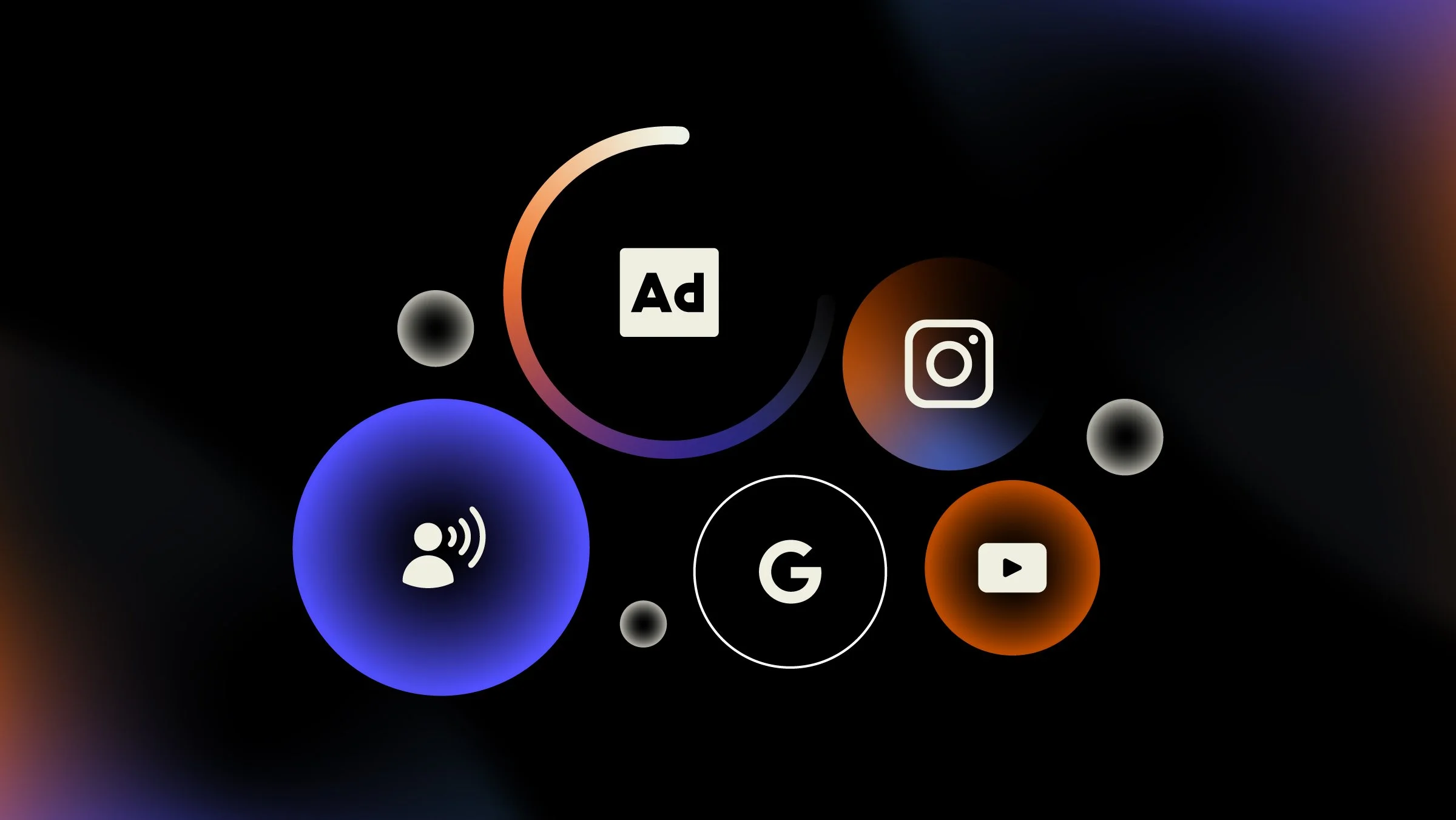
An integrated media ecosystem, working as one.
In practice, media solutions operate as a connected system rather than a collection of tactics. Multichannel coordination reduces internal competition and wasted reach. Advanced audience segmentation combines demographic, behavioral, and intent-based data to improve relevance. Measurement extends beyond surface-level metrics, tracking performance from first impression to conversion and return on investment. Continuous, data-driven optimization ensures the strategy evolves in response to real performance and changing market conditions.
For leadership teams, this structure transforms advertising from an operational expense into a controllable growth lever—one that can be measured, optimized, and scaled with confidence.
Why Media Solutions Matter More Than Ever
Rising media costs, stricter privacy regulations, increased competition, and longer decision cycles have made fragmented advertising models increasingly inefficient. Running disconnected campaigns across platforms no longer provides the visibility or control required to justify growing budgets.
For executives, the challenge is no longer whether to invest in digital advertising, but how to ensure that investment remains accountable, efficient, and aligned with broader business goals. Media solutions address this challenge by bringing structure to complexity, clarity to performance, and strategic control to advertising investment.
The Business Impact of Implementing Media Solutions
When media is managed as a system, its impact goes far beyond campaign-level performance. The benefits are reflected in financial efficiency, decision-making quality, and long-term scalability.
A structured media solution enables leadership teams to clearly identify which channels, audiences, and formats generate real business value. Centralized planning and unified measurement reduce waste by eliminating low-performing tactics and reallocating budget toward initiatives that directly support commercial objectives.
At the same time, coordinated targeting across platforms ensures messages reach the right audiences at the right moments. Rather than relying on isolated signals, media solutions align segmentation strategies across channels, improving relevance and reducing unnecessary saturation.
Perhaps most importantly, media solutions make growth scalable. By continuously analyzing performance and adjusting investment, organizations can increase spend while maintaining—or improving—key efficiency metrics such as CPA and ROAS. This controlled scalability is critical for companies seeking predictable growth rather than short-term spikes.
Finally, media solutions provide full-funnel visibility. Awareness, consideration, and conversion efforts are integrated within a single framework, allowing leadership teams to understand the true contribution of media at every stage of the customer journey.
At Loymark, media solutions are built on this principle: every tactic serves a defined business objective, supported by clear metrics and continuous performance analysis.
Precision-driven targeting across social platforms.
Common Pitfalls in Media Strategy Execution
Many organizations invest heavily in digital media yet fail to achieve meaningful impact. In most cases, the issue is not budget size or platform choice, but how the strategy is structured and managed.
One of the most frequent pitfalls is launching campaigns without clearly defined objectives. When success is not explicitly tied to outcomes such as qualified leads, revenue contribution, or pipeline growth, performance becomes difficult to evaluate and nearly impossible to optimize.
Another common issue is channel fragmentation. Running Google, Meta, and LinkedIn campaigns independently often leads to duplicated audiences, inconsistent messaging, and reduced efficiency. Instead of reinforcing one another, channels compete for attention and budget.
Measurement focused solely on vanity metrics further limits decision-making. Impressions and clicks indicate activity, not impact. Without tracking conversions, cost efficiency, and revenue contribution, leadership teams lack the insight needed to make informed strategic decisions.
Finally, many organizations underestimate the importance of continuous optimization and creative performance. Digital advertising environments evolve rapidly, and even well-structured campaigns lose effectiveness if they are not actively refined. Strong targeting alone is not enough if messaging fails to resonate.
How to Structure an Effective Media Solutions Strategy
An effective media solutions strategy is built as a system, where every decision aligns with a clear objective and is refined through data.
The process begins with defining success. Whether the goal is qualified lead generation, online sales growth, brand positioning, or customer retention, clear objectives enable the selection of relevant KPIs and provide a benchmark for evaluating real impact.
From there, deep audience understanding becomes essential. Effective media solutions are grounded in a clear picture of who the ideal customer is, how they behave, and what signals indicate intent. Demographic, behavioral, and intent-based insights work together to improve relevance and efficiency.
Channel selection and coordination follow naturally. Each platform plays a specific role within the conversion funnel—search captures active demand, social builds interest and awareness, LinkedIn reaches B2B decision-makers, and programmatic channels provide scale and retargeting. Coordination across these channels maximizes collective impact.
Creative development is equally critical. Messaging must align not only with the platform, but with the user’s stage in the decision process. Continuous testing of copy, visuals, video, and calls to action identifies what resonates and enables scalable performance. None of this is possible without robust measurement. Reliable conversion tracking, CRM integration, real-time dashboards, and performance reporting provide the foundation for informed decision-making.
Finally, continuous optimization ties everything together. High-performing media strategies are never static. Budgets, audiences, creatives, and tactics are refined constantly based on performance data, allowing results to scale without sacrificing efficiency.
At Loymark, media solutions follow this exact logic: clear objectives, data-driven decisions, and ongoing optimization to turn advertising investment into a scalable growth system.
How Media Solutions Drive Results Across Business Models

Data-backed growth and measurable results.
Because media solutions are built on integration rather than isolated tactics, they adapt to different business models and growth objectives.
For ecommerce companies, media solutions influence the entire purchase journey. High-intent demand is captured through search and shopping campaigns, qualified traffic is driven through dynamic social formats, and abandoned carts are recovered through coordinated retargeting. This integrated approach supports predictable revenue growth and stronger return on ad spend.
In B2B environments, where decision cycles are longer and more complex, media solutions combine precision targeting on LinkedIn, demand capture through search, and sustained brand presence via retargeting. The result is higher-quality leads and stronger alignment between marketing and sales.
For brands focused on growth or market expansion, media solutions enable a progressive approach. Awareness and education precede conversion tactics, reducing friction and building a foundation for sustainable long-term performance.
Frequently Asked Questions About Media Solutions
What is the minimum investment required to implement media solutions?
There is no universal minimum. The required investment depends on the market, competition, and business objectives. What matters most is reaching enough scale to generate meaningful data. Without sufficient volume, optimization becomes speculative rather than strategic. Media solutions prioritize learning velocity as much as immediate performance.
How long does it take to see results from media solutions?
Digital media can generate traffic and visibility almost immediately. However, consistent and scalable results typically require time. In most cases, a minimum of 90 days is recommended to test, measure, and optimize effectively. Media solutions are designed for sustained performance, not short-term spikes.
Are media solutions only suitable for large enterprises?
No. While large organizations benefit significantly from integrated media strategies, company size is not the deciding factor. Strategic clarity, disciplined execution, and continuous optimization matter far more than budget volume. Mid-sized and growing companies often see outsized gains by moving away from fragmented media execution.
Is Google Ads enough to drive business growth?
Google Ads is highly effective for capturing active demand, but relying on a single channel limits growth potential. Decision-makers rarely convert after one interaction. Media solutions integrate search, social, video, and retargeting to influence the full customer journey, increasing efficiency and conversion rates over time.
Does automation replace human strategy in media solutions?
Automation improves speed and scale, but it does not define business priorities. Algorithms execute decisions; they do not set strategy. Media solutions rely on human expertise to interpret data, align media activity with business goals, and make informed adjustments. Technology amplifies strategy—it does not replace it.
Is it necessary to work with a media solutions agency?
Not strictly, but experienced media solutions agencies provide strategic perspective, advanced tooling, and optimization discipline that are difficult to replicate internally in the short term. For leadership teams, this often translates into faster learning, reduced waste, and stronger return on investment.
The Path Forward: From Fragmentation to Integration
Media solutions have transformed digital advertising from disconnected tactics into integrated systems focused on measurable business outcomes. For organizations pursuing sustainable growth, this shift is not cosmetic—it is structural.
The real advantage of media solutions lies in control. Control over how investment translates into performance. Control over how channels work together rather than in isolation. Control over how data informs decisions instead of reacting to surface-level metrics.
Companies that continue to manage paid media as fragmented campaigns will face diminishing returns and limited visibility. Those that adopt an integrated media solutions approach gain the ability to scale with confidence, adapt with precision, and make decisions grounded in real business impact.
At Loymark, we design media solutions as growth systems—not as disconnected executions. Our approach combines strategic planning, advanced analytics, creative performance, and continuous optimization to ensure advertising investment becomes a competitive advantage.
If your organization is ready to move from fragmented media execution to a scalable, accountable growth model, request a strategic consultation with Loymark and discover how media solutions can drive predictable, sustainable growth.